-
AboutThe company is mainly engaged in the research and development, production, integration and technical services of intelligent gas, intelligent water information system and intelligent water meter and intelligent gas meter.
-
Ultrasonic Water MeterThe ultrasonic water meter is the all-electronic meter using the time difference of the forward and backward flow of ultrasonic signal in the water to measure. It has the features of reliability, high accuracy, temperature compensation and so on. Comparing with the traditional mechanical water meter, this one has the significant improvement in accuracy, life and pressure loss, it is the ‘smart water meter 2.0 version’ product.
-
Smart Gas MeterThe company is mainly engaged in the research and development, production, integration and technical services of intelligent gas, intelligent water information system and intelligent water meter and intelligent gas meter.
-
Ultrasonic Module
-
Factory Solution
-
ContactThe company is mainly engaged in the research and development, production, integration and technical services of intelligent gas, intelligent water information system and intelligent water meter and intelligent gas meter.

News Center
Get to know the new information of Jicheng Electronics in real time and pay attention to the new trends of Jicheng products.
Rural drinking water safety project how to solve the problem of charging?
Release time:
2020-06-22
Author:
Qingdao Jicheng ieslab
Source:
It is necessary to grasp the collection of water charges and establish a sound long-term mechanism. Give full play to the "bull nose" role of water fee collection in promoting the sustainable operation of the project, especially to implement metering and charging, and improve the awareness of water users to save water. In accordance with the relevant provisions of the Ministry of Water Resources, the responsibility shall be seriously investigated for those places where the objectives and tasks of water fee collection at all stages are not completed effectively.
Recently, the Ministry of Water Resources held a video dispatching meeting on rural drinking water safety to redeploy and compact the work of poverty alleviation in rural drinking water safety. tian xuebin, vice minister of water resources, emphatically mentioned in his speech:
It is necessary to grasp the collection of water charges and establish a sound long-term mechanism. Give full play to the "bull nose" role of water fee collection in promoting the sustainable operation of the project, especially to implement metering and charging, and improve the awareness of water users to save water. In accordance with the relevant provisions of the Ministry of Water Resources, the responsibility shall be seriously investigated for those places where the objectives and tasks of water fee collection at all stages are not completed effectively.
The charge of drinking water in rural areas has always been a big problem for the water department. At the same time, the rural water supply project is wide and large, the scale of a single project is small, the economic benefit is low, and the management is difficult.
①In terms of management, many villages and towns have only 1 to 2 people to manage water supply projects, and most of them are farmers who have not been trained, with low technical level and weak management awareness.
② In terms of service, there are phenomena such as different water charges, different initial installation fees, different frequency of water quality monitoring, and different protection of water sources in the same water supply area. The collection of water charges and household fees is not standardized, the service is not in place, not timely and other problems, the masses reacted strongly to this.
③In terms of consciousness, many rural areas have wells, rivers, and lakes. Free water has become a habit, and there is no safety awareness. Village cadres persuade them from house to house, and experts test the water quality on the spot. However, some villagers are still indifferent, just don't nod, and pay water. There is resistance.
In the No. 1 document of the Central Committee in 2020, the government once again mentioned the integration of urban and rural water supply to achieve the goal of "the same water quality, the same service, the same management, and the same price.
However, under the current situation that rural water supply is generally profitable, there is no subsidy policy at the higher level, and water prices are limited by national policies and cannot be raised significantly, the economic benefits of rural water supply are poor, the market attractiveness is weak, and the enthusiasm of social capital participation is not high. The construction, management and maintenance costs of rural water supply projects are much higher than those of urban water supply. The operating costs include high electricity costs and high charging costs.
The rural people live in scattered areas, and a large number of toll collectors need to be arranged to be distributed to thousands of households to collect fees. It is very difficult to collect water fees. Not only is there a large amount of missing and unpaid fees, but the wages of toll collectors also increase the burden on water plants.
Qingdao Jicheng NB-IoT Ultrasonic Water Meter, in-depth cooperation with AMS, adopts GP30 chip to form a "unique high sampling rate, high precision and low power consumption" metering scheme to provide assistance for agricultural drinking water safety projects.
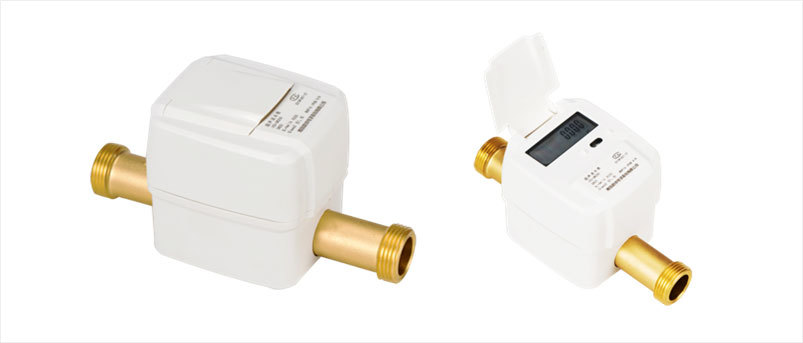
Advantage 1: There are no mechanical moving parts in the table, pure copper shell, not affected by impurities in the water, longer service life, low failure rate, and more antifreeze. The large-capacity battery can support more than 10 years of service life, and the undervoltage alarm is 180 days in advance.
Advantage 2: IP68 protection level, adapt to the installation requirements of various harsh environments, such as water wells, outdoor and other places. Highly intelligent self-inspection capability to monitor common problems such as air traffic control, bubbles, transducer aging, and battery undervoltage;
Advantage three: low starting flow, drip metering. And support remote valve control, with the revenue system, easy to achieve prepaid functions and data upload and analysis.
Advantage 4: Support multiple interfaces (M-Bus interface, RS-485 interface, Internet of Things, NB-IoT); Comply with GB/T 778-2007 "Measurement of Water Flow in Closed Full Pipeline, Citing Cold Water Meter and Hot Water Meter" and "CJT 434-2013 Ultrasonic Water Meter" standards.
Problems such as multiple points of rural water supply, long lines and wide coverage, low water supply security rate, and difficulty in collecting water fees have always been the "last mile" problem of rural water supply. Using Internet thinking, actively explore a new path of "Internet rural water supply" management.
The use of intelligent water meters can not only reduce personnel costs, operation and maintenance costs, but also greatly reduce the leakage rate and ensure the healthy operation of the water department.
Key words:
Rural drinking water
Recommended News
sale@qd-ies.com
support@qd-ies.com